Working Group 9: Investigating the bidirectional interactions between GIBA, circadian rhythms, and sleep
Investigating the bidirectional interactions between GIBA, circadian rhythms, and sleep
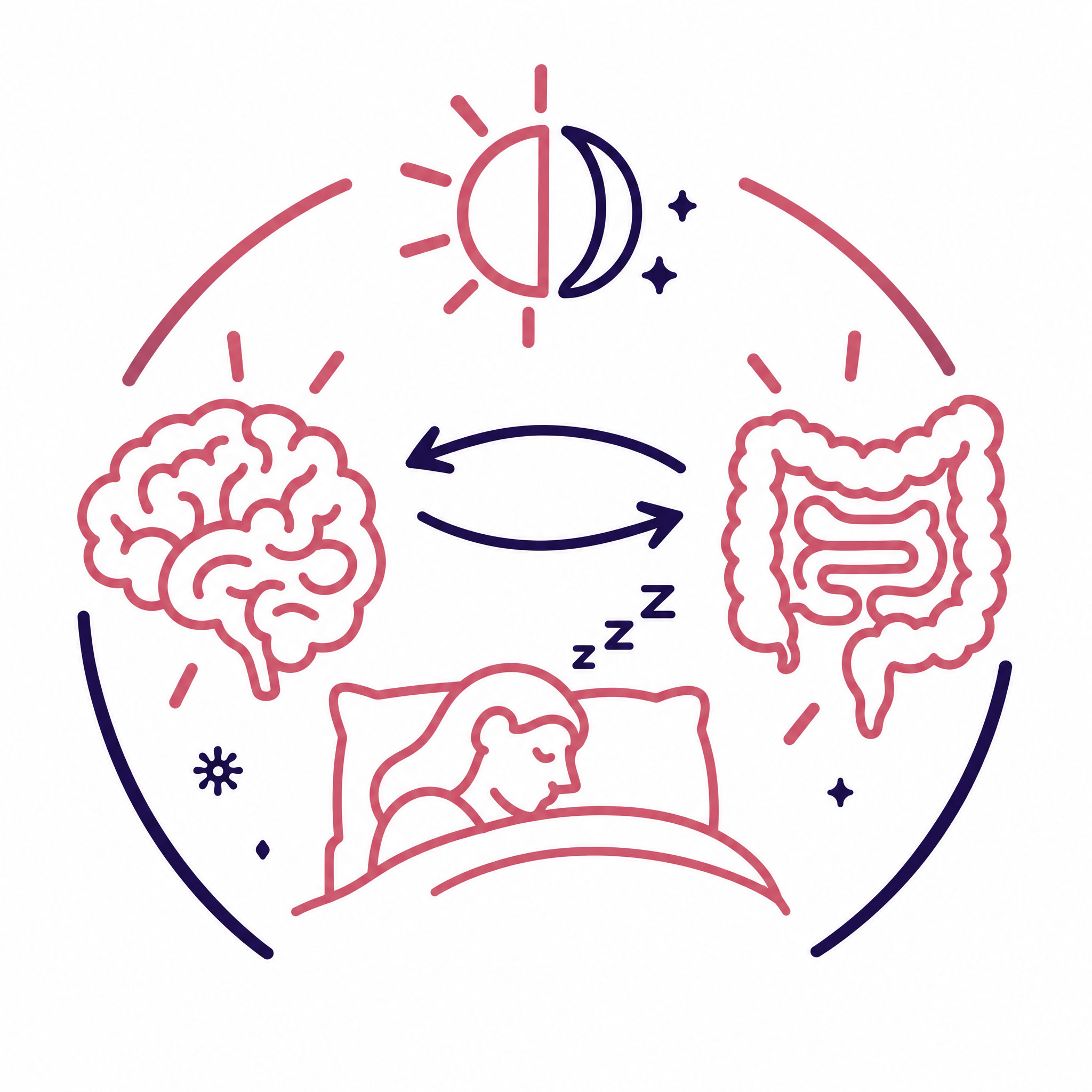
How does the circadian system and the gut-brain axis influence each other and what are the implications for sleep?
Daily rhythms occur across many gut, immune, and brain processes and can influence health. Growing evidence indicates that the host circadian system shapes daily variation in the composition and function of the gut microbiome, as well as communication between microbial and host pathways. These interconnected rhythms can be disrupted by factors such as shift work, jet lag, and sleep deprivation, with potential consequences for physical and mental health. Conversely, changes in mental health and sleep may affect signalling across the gut-immune-brain axis. This working group will build research capacity and foster interdisciplinary collaboration to investigate the temporal dynamics of these cross-kingdom, inter-organ interactions, and determine how they influence human health.
Working Group Leads

Jonathan Swann
Director of the GIBA Network+
Jonathan Swann is a Professor of Biomolecular Medicine in the School of Human Development and Health, Faculty of Medicine at the University of Southampton.
For over 20 years he has led an integrated microbial and metabolic profiling-based research programme to understand the influence of the gut microbiota on the mammalian metabolic system and its implications for development, health, and disease with a specific interest in the gut-immune-brain axis. He has received funding from national and international research councils, charities and industry partners to explore the microbial influence on emotional behaviour, cognitive function, neurodevelopment, neurological dysfunction and neurodegeneration.