Working Group 10: What is the mechanistic basis underlying the interaction between the human microbiome and gut-immune-brain health?
What is the mechanistic basis underlying the interaction between the human microbiome and gut-immune-brain health?
Uncovering the mechanisms linking the human microbiome, gut-immune-brain axis, and health across the life course
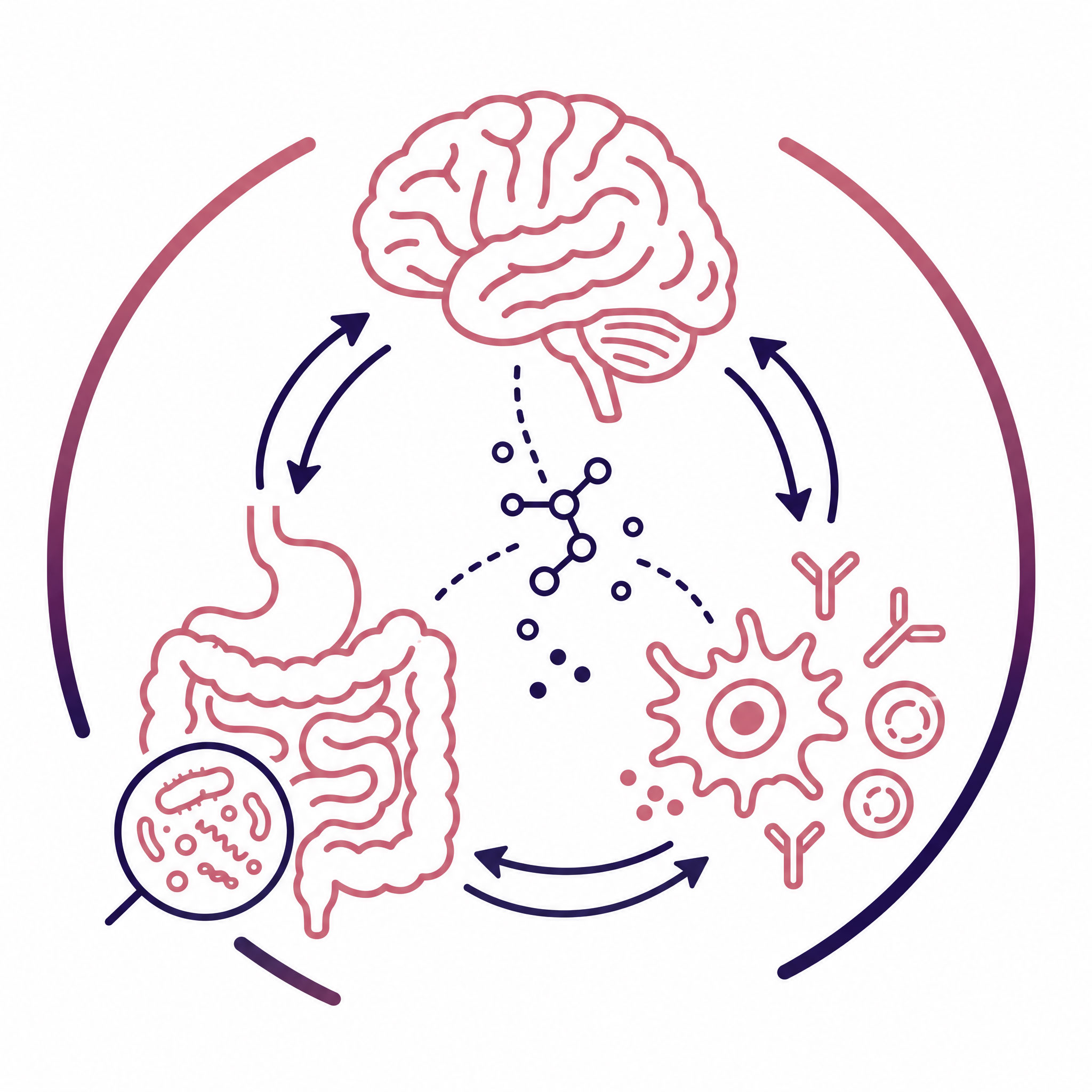
Over recent decades, emerging research has highlighted the complex and bidirectional interactions between the human microbiome, immune system, and brain, and their health implications. However, the molecular, cellular, and physiological mechanisms underpinning these interactions remain poorly understood.
Addressing these knowledge gaps requires concerted interdisciplinary efforts spanning microbiology, immunology, neuroscience, bioinformatics, and systems biology. Our working group aims to build research capacity and foster interdisciplinary collaborations to elucidate the mechanisms influencing microbiome-gut-immune-brain axis communication and advance our understanding of their roles in human health.
Working Group Leads


Alexandre Almeida
Research training lead
Alex is a Group Leader at the University of Cambridge, where he leads a research team developing and applying bioinformatics approaches to understand the human microbiome’s role in health and disease.
Using large-scale metagenomic methods, his work led to the discovery of thousands of uncultivated bacteria and viruses in the human gut microbiome. Since 2022, Alex has held an MRC Career Development Award fellowship dedicated to characterising the relevance of this newly uncovered microbial diversity to human health and disease. His current research explores the potential of the human microbiome for disease prediction, diagnosis, and treatment, with projects focusing on neurodegenerative diseases and ageing.